Friday, December 29, 2006

Pay Dirt: Top Religion Headlines of 2006


Top Religion Headlines of 2006 (Source: BeliefNet.com)

From Baghdad to the ballot box, 2006 was a year of upheaval. A prominent pastor and a powerful conservative Christian senator both exited public life (at least for now). The quiet, unassuming Amish world was thrust into the national spotlight. A movie and a cartoon each sparked controversy, and in the case of the latter, violence. Meanwhile, "old" issues--stem cell research, gay marriage--continued to divide. Read through the top faith-related news stories of 2006, as voted on by the Religion Newswriters Association:

1. Protests Erupt Over Muhammad Cartoon - Muslims in many countries reacted sharply--and often violently--to the publication in a Danish newspaper of a series of political cartoons depicting Muhammad. Muslims consider any portrayal of the prophet inappropriate, but were particularly inflamed by a cartoon of Muhammad with a bomb as his turban. As the violence spread to such places as Somalia, Thailand, and the Palestinian territories, many publications in Europe and elsewhere reprinted the cartoon in solidarity with the Danish newspaper, further fueling Muslims' anger.

2. Pope Benedict Angers Muslims - Pope Benedict XVI angered Muslims by quoting in a speech from a 14th-century Christian emporer who said that Muhammad was "evil and inhuman." The pope apologized and largely diffused the situation with a trip to Turkey, during which he prayed at a mosque and voiced support for Turkey's bid to become the first majority-Muslim member of the European Union.

3. The Episcopal Church Is Threatened by Schism - The Episcopal Church riled conservatives by electing a presiding bishop who supported the consecration of a gay bishop. Seven Episcopal dioceses refused to recognize the leadership of Presiding Bishop Katharine Jefferts Schori, the first woman elected to the top post. Some congregations have left the U.S. church and put themselves under the authority of African or South American bishops.

4. Ted Haggard Admits to 'Sexual Immorality' - The charismatic and powerful evangelical leader Ted Haggard was dismissed as pastor of the influential New Life Church in Colorado Springs and resigned as president of the National Association of Evangelicals after allegations surfaced of gay sex and methamphetamine use. Haggard has admitted that at least some of the accusations are true, calling himself "a deceiver and a liar," and saying in a letter to his congregation, "There is a part of my life that is so repulsive and dark that I've been warring against it all of my adult life."

5. Electoral Setbacks for Christian Conservatives - Candidates backed by Christian conservatives, including Rick Santorum (at right)--the powerful Pennsylvania senator who was one of the most steadfast supporters of the conservative agenda--suffered a series of defeats in the fall elections. An increasing number of Christian conservatives are calling for evangelicals to broaden their focus to include a wider array of issues and voices, or to take a step back from intense political involvement altogether.

6. Religious Violence Grows in the Mideast - As religious voices increasingly called for peace in Iraq, conflicts between Iraq's Sunni and Shiite Muslims intensified, and observers fear other nations could be drawn into the conflict. In Lebanon, the Israeli incursion, aimed at curbing attacks by Hezbollah, touched off major strife that is threatening the stability of Lebanon's government, while Iran's president Mahmoud Ahmadinejad repeatedly called for Israel's destruction and continued defying the West by refusing to abandon his nuclear ambitions.

7. The Amish Forgive a Schoolhouse Killer - Pennsylvania's Amish community was thrust into the national spotlight when a gunman entered a one-room schoolhouse in Nickel Mines, Pa., and shot 10 Amish girls, killing five, before shooting himself. Despite their shock and grief, the community reacted by publicly forgiving the gunman, bringing food to his family, and attending his funeral. Children who survived the massacre told of one of the murdered girls, Marian Fisher, who reportedly offered to be the first killed, to spare the others.

8 (tie). 'The Da Vinci Code' Movie Opens - Dan Brown's novel has sparked controversy since its publication, with its claims that Mary Magdalene and Jesus were married and had children--and its allegations that the Vatican has covered up these "facts," often violently, throughout the centuries. In the months leading up to the May release of "The Da Vinci Code" movie, Christians were divided over whether to boycott the film or engage with it as an opportunity for evangelism. Most seemed to take the latter route.

8 (tie). Gay Marriage Continues to Divide - In New Jersey, the state Supreme Court ruled that same-sex couples are entitled to the same benefits as married couples, leaving the legislature to decide what to call the arrangement. In response, the legislature passed and the governor signed a bill legalizing "civil unions" in the state. In the November elections, voters made Arizona the first state to defeat a proposed same-sex marriage ban. At the same time, referendums in seven other states passed, officially outlawing gay marriage there.

10. Pres. Bush Vetoes Stem-Cell Research Expansion - In the first veto of his presidency, Bush said no to a bill that would have expanded stem-cell research. The decision was no surprise: Bush has been consistently opposed to scientific research that involves destroying viable human embryos. The issue also was prominent in the Missouri Senate race, during which Michael J. Fox campaigned in support of a referendum to expand stem cell rearch and for Democrat Claire McCaskill, who backed the proposed bill. Other celebrities joined in on either side of the issue, making commercials that aired leading up to the election, in which McCaskill won and the referendum passed.

Friday, December 22, 2006

Pay Dirt: The Mystery of Christmas


I watched a fascinating 48 Hours Mystery episode on "The Mystery of Christmas". Worth a read of the website summary: http://www.cbsnews.com/stories/2005/12/19/48hours/main1135330.shtml


In addition, this morning a good friend of mine pointed out the following article to me which is also a good read:

A Religious Santa Claus Tale: The birth narrative of Jesus shouldn't be taken literally by John Shelby Spong

The birth narrative of Jesus shouldn't be taken literally. Each year, the symbols are everywhere: on radio and television, in newspapers and magazine ads, in store windows, and eventually in our own homes. Sometimes they depict a jolly old elf dressed in red, sometimes accompanied by reindeer and a sleigh. Sometimes they show a manger, a baby, angels singing to shepherds, or wise men following a star. Some of the symbols rotate around the North Pole, the others around a little town named Bethlehem.

Most people do not literalize the story of Santa Claus. He is a symbol--a powerful symbol, but still just a symbol. I suggest that the birth narratives of Jesus, too, cannot be taken literally. They, too, are symbols, a religious version of Santa Claus. Some religious people will be offended by that suggestion. I invite them to reconsider.

The biblical story of Christmas is probably the best known text in the New Testament. These narratives have been part of our conscious life for as long as most of us can remember. We have seen pageants annually; perhaps we have even starred in one. We think we know this biblical content quite well. But do we? How long has it been since we have actually read the biblical text that tells the story of that first Christmas? And how much of our reading is colored by long-standing traditions, a pious imagination, or even those pageants in which we have participated?

Consider:

The average person would be quite sure that the mode of transportation employed by the Wise Men was the camel. Yet there are no camels in this biblical story at all, not a single one. They have been placed into Matthew's story by our imaginations, as a careful reading of the first two chapters of Matthew, the only place the story of the Wise Men is told, will reveal.

Second, if one is asked where in Bethlehem the birth of Jesus occurred, the familiar and traditional answer would be "in a stable surrounded by a variety of animals." We have seen that picture so often, we are quite sure of it. But we would be wrong again. There are no animals mentioned in the story of Jesus' birth, primarily because there is no stable present in which to house them. The stable is simply not part of the biblical birth story of Jesus. Check it out. Read the first two chapters of Luke. That is the only place in the Bible where details of his Bethlehem birth are given. There is only one word--crib, or manger--around which the stable has been erected in our imaginations.

Third, these two passages in Matthew and Luke are the only accounts of Jesus' birth found in the entire Bible. There is no mention of a miraculous birth for Jesus in the writings of Paul, in the gospel of Mark, or in the gospel of John, as a quick scan of these texts will reveal.

Paul, who is the first author of a book in the New Testament (he wrote between 50 and 64 C.E.), appears to have no knowledge of anything being unusual about Jesus' birth. All Paul says is that Jesus was "born of a woman, born under the law" (Galatians 4:4) and "according to the flesh" he was "descended from the House of David" (Romans 1:3). Paul never mentions the names of Mary or Joseph. The only reference he makes to a member of the family of Jesus was to James, whom he called "the Lord's brother," and with whom he did not get along very well (Galatians 1).

Mark, who wrote his gospel in the early years of the eighth decade of the Christian era (70-75 C.E.), also tells us no story of Jesus' birth. He does, however, have two references to Jesus' family (Mark 3:31-35, 6:1-6), neither of which is flattering. Mark writes that Jesus' family consists of his mother, four brothers (Simon, Judas, Joses and James), and more than one sister, all left unnamed because of the status of women in that time.

This family, led by Jesus' mother, believed Jesus was out of his mind and wanted to take him away. That is hardly the response one would expect from a woman to whom an angel had appeared to tell her that she would be the virgin mother of the Son of God.

Joseph makes no appearance in Mark's gospel, and Mary as the name of Jesus' mother appears only once--and that on the lips of a critic, who asks of Jesus, "Is not this the carpenter, the son of Mary?" (Mark 6:3). Please note that in the earliest gospel, Jesus is a carpenter, Joseph is unmentioned, and Jesus is called the son of Mary. To call a Jewish man the son of a woman had a mildly pejorative quality about it. It was a hint that perhaps his paternity was questionable. But that is all we have in written form from any early Christian source until at least 50 years have passed since the end of Jesus' earthly life.

Mark clearly did not know about the virgin birth tradition. It had not yet developed.

Skipping over to John, written some time between 95 and 100 C.E., we discover that this writer also does not mention the Virgin Birth. It would be difficult to argue that by this late date, the author had not heard of that tradition. Instead, he opens his story with an even more powerful God claim: Jesus was the pre-existent word of God present at the creation. This word of God was simply enfleshed, said the fourth gospel. But that was not achieved by way of a miraculous birth. Indeed, on two occasions this evangelist refers to Jesus as "the son of Joseph" (John 1:45, 6:42).

So in the five major sources of New Testament materials--Paul, Mark, Matthew, Luke, and John--only two, Luke and Matthew, mention the Virgin Birth. It is neither the majority nor the universal understanding of Jesus' origins even in the Bible.

When we turn to the actual text in Matthew and Luke, the questions and problems indicating that these stories are not literal history multiply. Matthew, who wrote between 80 and 85 C.E., wrote the first stories of Jesus' birth. He was also the gospel writer most appreciative of and anchored in his Jewish background. Matthew introduced this birth story with a genealogy that grounds Jesus in a thoroughly Jewish past, describing his lineage from Abraham, through David and the kings of Judah, to the exile and finally to Joseph, whom he identified as "the husband of Mary of whom was born Jesus who is called Christ" (Matthew 1:16). Provocatively enough, and quite rare in the ancient world, Matthew adds four women to this lengthy genealogy-- all of whom are sexually tainted in the stories about them in the Hebrew Scriptures.

First there is Tamar, the daughter-in-law of Judah who became pregnant by her father-in-law in an incestuous relationship (Matthew 2:1, Genesis 38). Yet Matthew says the line of Jesus came through this woman.

Next, there is Rahab, who was called "the harlot," who assisted with Joshua's invasion of the promised land (Matthew. 1:5, Joshua 2). Matthew also says the line of Jesus came through this woman.

Then there is Ruth, the great-grandmother of King David who in her time was said to have seduced her future husband, Boaz, with the aid of much wine. When Boaz woke up to discover Ruth in his bed, he covered her with his blanket and proceeded to do the honorable thing by marrying her (Matthew 1:5, Ruth 3). The hereditary background of Jesus includes Ruth, according to Matthew.

Finally, there was "Uriah's Wife," Bathsheba, who was first King David's adulterous lover and eventually, after David arranged for the death of her husband, his wife (one among many). She was also the mother of the heirs of David's throne, including King Solomon. Bathsheba, an adulterer, is thus a major player in the line of Judah's kings and Jesus' ancestry (Matthew 1:6, II Samuel 11).

One wonders what he means to imply about Mary, who is the fifth woman mentioned in his genealogy.

Over and over again, Matthew grounds his story of Jesus' birth in the presumed expectation of the Hebrew Scriptures. When he comes to the story of Jesus' miraculous birth, his proof text appears to be Isaiah 7:14. It is a familiar text that reads, "Behold, a virgin shall conceive and bear a son and shall call his name Immanuel." Clearly, Matthew developed his story under the influence of that text.

This text, however, has two problems. First, Matthew did not apparently read Hebrew, so he quoted this text from a Greek translation. If he had gone to the Hebrew original, he would have discovered that the word "virgin" is not in the book of Isaiah. Isaiah used the Hebrew word almah, which simply means "young woman." He did not use the word betulah, which means virgin. Isaiah's text announces that the woman is with child, which hardly qualifies her to be a virgin. When Isaiah was translated into Greek, the translators rendered almah with the Greek word parthenos. Only in that Greek word does the hint of virginity enter the text.

The second problem with this text is that when Isaiah wrote it, the city of Jerusalem was under siege from the combined armies of the Northern Kingdom and Syria. Isaiah suggested that the birth of this child would be a sign to the king of Judah that his nation would not fall to these enemies whom Isaiah described as "the tails of two smoking firebrands." A reference to a child born 800 years later would hardly have been relevant to that crisis.

Clearly, the prophet was not referring to either Jesus' birth or to some future messiah's birth.

There are still other problems connected with the stories of Jesus' birth, but these are sufficient to raise significant questions about their historicity--an issue I believe Christians must face. When one adds to that the fact that virgin birth stories were common in the Mediterranean world as part of the mythology of the first century, other concerns surface. A second-century Christian critic named Celsus articulated this concern when he wrote: "Do you think all the other stories are legends, but that your story of Jesus alone is noble and convincing?"

If the biblical stories we identify with Christmas are not history, then what are they? And what do they mean? Why did these stories become so powerful in shaping the Christian world? What are the story writers trying to communicate about God, about Jesus, about human life itself? Those will be the questions I intend to address in this column as the Christmas season unfolds.

Saturday, December 16, 2006

Bible Exploration


Well, it has been a couple of weeks since I finished my fundamentals framework. Since that time, I've been thinking about what I should tackle next. I've wavered between a few options, but I think I'm going to try to address the Bible in more depth.

I touched on the Bible in my Bible Beliefs entry, and I noted the pivotal importance that your perspective on the Bible (i.e. as either a divine product [God's very words] or as a human product reflecting the experiences and responses of two communities to God and Jesus) has on your approach to Christianity and theology. I also noted the impact that a couple of books had on my understanding of the Bible: Misquoting Jesus (by Bart Ehrman) and Reading the Bible Again for the First Time (by Marcus Borg). I am part way through two other books which continue to shed light on the Bible for me: Rescuing the Bible from Fundamentalism (by John Shelby Spong) and The Last Week (by Marcus Borg and John Dominic Crossan). Before I finish this series of blog entries, I anticipate delving into History of the End of the World (by Jonathan Kirsch).

So I'm going to try to provide a synopsis of what I've learned in these books. Here is my outline for this endeavour:

I must admit that this is a daunting exercise for me. I know for certain that it will take me a long time to complete this effort, and, as I start, I'm not even sure I will be able to finish. But as I felt when I started my fundamentals framework, I feel like this is the right topic to dive into next so that I can adequately explain and support my current Christian thinking.

Before I start, let me clarify that I anticipate taking very little credit for the thinking that will lie beneath the blog entries in this series - I am not a Biblical scholar by trade. I fully anticipate leaning heavily on the books I mentioned earlier, and I will attempt to give credit where I can.

I hope this series will be useful to all who encounter it. I will repeat the same three goals (1) I noted when I began my fundamentals framework, since they are equally relevant for this Bible Exploration series:

  • That the blog entries will be "interesting and refreshing" to Christians and non-Christians and will help both to "grapple with points of view they might otherwise have dismissed without serious thought";
  • That the blog entries' content might help "shift logjammed debates into more fruitful possibilities"; and,
  • Somewhat selfishly, that the process of writing the blog entries will help me to "grow in [my] understanding of the subject matter, and enable others to do so as well".

Here we go again...

Notes:
(1) Marcus J. Borg and N. T. Wright, The Meaning of Jesus: Two Visions (San Francisco, HarperSanFrancisco, 1999).

Saturday, November 25, 2006

Transformation: What It's All About


With this blog entry, I have reached the conclusion of my Fundamentals Framework. So in this entry, I'd like to share a few summary thoughts on what I think the core of "being a Christian" is all about and why I have chosen Christianity as my pathway to God.

(1) Christianity for me is, first and foremost, about a personal transformation - a transformation to a life that is centered in God and that is intentional about having a deepening relationship with the Sacred. The result of that personal transformation is growth in love and compassion and life that can be lived more fully.

(2) Christianity for me is also about a social transformation that should lead to experiencing the "Kingdom of God" today...that is, the way life on earth (yes on earth, not heaven) would be today if God was ruler. The result of this social transformation is a focus on justice for the poor and marginalized, an indictment of the religious and political elites and a resistence to oppressive cultural systems of unfairness and dominance.

Why have I chosen Christianity as my pathway to God? Well, for me it is what I have always known...and I am comfortable with it. It works for me in that it affirms the Sacred and experiencing the Sacred, and it shows a path of transformation along with practices and traditions that can assist with that transformation and serve as sacraments to the Sacred. For me, the way I currently see and understand Christianity makes sense to me as a path to God.

Thus far in this blog, I have tried to capture my beliefs about Christianity and, in so doing, clarify my own Christian fundamentals (for a summary see My Fundamental Beliefs - Summary). Through undertaking this endeavour, I feel more comfortable that I can avoid answering "yes" to the questions posed in Mark 8:17-18: "Do you still not perceive or understand?...Do you have eyes, and fail to see? Do you have ears and fail to hear?". Hopefully, in some small way, my ramblings have also helped others avoid answering "yes" to these questions.
POSTSCRIPT: NOT SURE WHERE TO START WITH THIS ONE 3 YEARS LATER. I AM MUCH LESS FOCUSED ON CHRISTIANITY THESE DAYS...SO IT IS STILL THE RELIGION I UNDERSTAND THE MOST, BUT NOT THE FRAME OF REFERENCE I RELATE TO ON A REGULAR BASIS AT ALL. I DON'T BELIEVE IN "RELATIONSHIP" WITH THE SACRED LIKE I MIGHT HAVE 3 YEARS AGO AND UNFORTUNATELY, THE CHRISTIAN RELIGION IS SO SKEWED AT THIS POINT FROM A MAINSTREAM CHRISTIAN PERSPECTIVE, THAT THE IDEA OF SOCIAL TRANSFORMATION THROUGH THE CHRISTIAN RELIGION DOESN'T SEEM LIKELY TO ME. FOR ME, LIFE IS ABOUT LIVING IT TO THE FULLEST AND LOVING THOSE AROUND YOU TO THE HIGHEST EXTENT POSSIBLE. HOPEFULLY THAT IS THE TRANSFORMATION I WILL EVENTUALLY ACHIEVE IN MY OWN LIFE.

Friday, November 24, 2006

Routines and Thin Places


Christianity is often defined by its routines like worship, prayer, Bible reading and study, attending church, listening to sermons, baptism, and communion. What is their purpose? How do they fit into Christianity? Are they required?

To answer those questions, I'll start with a concept called "thin places". This is a concept from Celtic Christianity (a form of Christianity that flourished in Ireland and parts of Scotland, Wales and northern England beginning in the fifth century). "Thin places" are places where the visible world of our ordinary experience meets or intersects with God, the sacred, Spirit. Occasionally, we do experience God through everything else...those are "thin places".

(1) I think the core purpose of Christian routines is to help us encounter "thin places" where our hearts are opened to experience God and grow in compassion and justice.

In that context:
  • Worship can be a thin place. It can create a sense of the sacred...it can move us to focus on and experience God.
  • Prayer and daily disciplines/devotions can be a thin place...see my What About Prayer? blog entry for some input on this.
  • Bible reading and Bible studies can be thin places...it can be sacramental (i.e. a bridge to the Sacred)...see my Bible Beliefs blog entry for further thoughts on this.
  • Being part of a church/Christian community and having Christian friendships can be thin places...if they nurture and nourish you while also stretching you at the same time.
  • Sermons can be thin places (in this case, I emphasize "can" be). Often they aren't, but sometimes they can be a thin place which opens our hearts to God matters.
  • Baptism and communion can be thin places as we focus on God by participating in these practices.

When I say these "thin places" help us experience God, what do I mean? I guess I'd say that through these types of Christian routines, we pay attention to God, we focus on topics like compassion and justice, we can deepen our Christian identity, we can be nourished. All these are ways to experience God. It doesn't mean that you have visions or hear voices or get specific direction or a sense of a direction even. But with a view that God is "isness without limits", I think we can "experience" God through these routines, even if only as "centering" activities that allow us to focus on or think through particular issues (sometimes I think this is all they are...but other times, I think you can "sense" God through these routines). I should note that these routines are often seen as chores or requirements for a Christian. I don't see them that way any more...I see them as potential practices that can help deepen our experience of God and lead us to a life of more compassion and justice.

(2) I don't think that Christian routines are requirements, nor do I think that they are always effective - but they can help us encounter "thin places".

In his book The Heart of Christianity, I like what Marcus Borg says about Christian practices: "Christian practice is about walking with God, becoming kind and doing justice. It is not about believing in God and being a good person; it is about how one becomes a good person through the practice of loving God." (1)

POSTSCRIPT: WELL, 3 YEARS LATER, I CAN SORT OF GET MY HEAD AROUND THIS...BUT SIMILAR TO MY VIEWS ON PRAYER, I THINK THESE TYPES OF ROUTINES ARE MORE ABOUT US THEN THEY ARE ABOUT "THIN PLACES" WHERE WE WOULD "EXPERIENCE" GOD - EVEN WITH THE BROADEST DEFINITION OF "EXPERIENCE" AS I EXPRESSED ABOVE.

Notes:
(1) Marcus J. Borg, The Heart of Christianity (San Francisco, HarperSanFrancisco, 2003).

What About Prayer?


“Not as in the old days I pray,
God. My life is not what it was…
Once I would have asked for healing
I go now to be doctored,
I would have knelt long, wrestling with you.
Wearing you down. Hear my prayer, Lord hear
my prayer. As though you were deaf, myriads
of mortals have kept up their shrill
cry, explaining your stillness by
their unfitness.

It begins to appear this is not what prayer is about.
It is the annihilation of differences,
the consciousness of myself in you,
of you in me; the emerging
from the adolescence of nature
into the adult geometry
of the mind…
Circular as our way
is, it leads not back to that snake haunted
garden, but onward to the tall city
of glass that is the laboratory of the spirit.”

- R. S. Thomas, Twentieth-century Welsh poet

I noted in My ‘More Than’ God blog entry that I think we can interact with and experience God, but that I don’t see God as an interventionalist God – otherwise, there are too many unexplainable non-interventions for a God of love, justice and compassion that I believe God to be. Having said that, I also noted that I don’t deny that there are some paranormal and supernatural happenings which can’t be explained. I don’t know if there is some link between these events and God, but I’m content not to be able to take a position on this one way or another at this point in time.

With that as context, what about prayer? I still think prayer makes sense...although maybe not in the way I used to. I’ve come to think about prayer more as us paying attention to God. There are 3 main types of prayer: verbal, meditation and contemplation.

Verbal prayer often involves petitions and intercessions. Given that I don’t think of God as an interventionalist God, one would think that these types of prayer don’t make sense to me. On the contrary, they do. Why? I can only say that they feel ‘right’ to me. It gives me some comfort, it makes me feel like I am, in a sense, caring for (or thinking of) others. Do I think these types of prayers make any difference? Well, paranormal things do happen. I don’t understand why or how, but, given our lack of knowledge of the supernatural, I’m not certain enough to state unequivocally that prayer never has any impact. But I'm not expecting that these prayers will change the mind or will of an 'out there' God so that he intervenes in the normal course of the universe. And, more importantly, regardless of their effectiveness, I think these types of prayer still have the impact of us paying attention to God or to the concepts surrounding God.

The second type of prayer is meditation, which involves reflecting on an image or phrase or text or idea…dwelling on it. The third type of prayer is contemplation, which is the practice of internal silence…sitting silently in the presence of “isness without limits”. It often involves the silent repetition of a single word or short phrase to give the mind a focus so that the ‘self’ can sink into silence. These are sometimes referred to as 'centering prayers'. These quiet times can be powerful mechanisms to enable a person to solve problems, work through issues and fears and step across barriers. Both of these forms of prayer are more common to eastern religions but seem to be in the process of being re-discovered in western religions.

So, in summary, my thoughts on prayer are as follows:

(1) Verbal (petitionary/intercessory) prayer feels ‘right’ to me – it is part of my process of thinking of and caring for others...but I don’t have an expectation that through these prayers I will change the mind or will of an ‘out there’ God so that He intervenes in the normal course of the universe.

(2) Meditative and contemplative prayers can be powerful ‘centering’ mechanisms that allow us to ‘pay attention’ to God and focus on ‘experiencing God’. I believe these types of prayer can impact and change the pray-er, which can then help the pray-er impact and help others .

POSTSCRIPT: WOW...3 YEARS LATER, I MUST SAY MY VIEWS ON THIS HAVE CHANGED COMPLETELY. NO LONGER DOES VERBAL PRAYER FEEL "RIGHT" TO ME...THE ONLY TIME IT EVEN OCCURS TO ME NOW IS IN THE MOST AWFUL OF SITUATIONS WHEN "OLD HABITS" KICK IN. AND I DON'T THINK THE MEDITATIVE/CONTEMPLATIVE PRAYERS HAVE ANYTHING TO DO WITH "EXPERIENCING" GOD...THEY MAY BE USEFUL TOOLS TO CALM AND CENTRE OUR MINDS, ETC., BUT I THINK THEY ARE ALL ABOUT US, NOT ABOUT AN EXPERIENCE WITH GOD.

Wednesday, November 15, 2006

Pay Dirt: A Heretic's Guide to Eternity


From the Foreward to A Heretic's Guide to Eternity:

"Someone recently sent me one of those clever top-ten lists that you always see floating around the Internet. It was entitled, "Top Ten Reasons Beer is Better than Religion." My favorite five out of the top ten are:
  1. No one will kill you for not drinking Beer.
  2. Beer has never caused a major war.
  3. Nobody's ever been burned at the stake, hanged or tortured over his brand of Beer.
  4. You don't have to wait 2000+ years for a second Beer.
  5. There are laws saying Beer labels can't lie to you.

Now I'm not advertising beer, but I am advertising that we who have a sincere faith in God realize that there are a number of downsides to religion...some of which are implied by the humorous beer list. There's a grim historical track record of religious inebriation that, like drunk driving, has taken or ruined too many lives already."

Sunday, November 12, 2006

Pay Dirt: Interview with Sam Harris


Courtesy of CBC.ca:

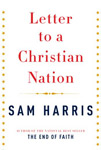
Sam Harris has been called a heretic – and a very brave man. Harris, author of The End of Faith, believes that religious tolerance is a disaster in the making – but that political correctness and fear of racism make any discussion of his idea utterly impossible. Sam Harris is ecumenical in his fear: the Christian who welcomes Armageddon as the harbinger of Jesus is just as terrifying as the Muslim who yearns for a martyr’s death to guarantee his place in paradise. Both, Harris believes, are driving a muzzled, timid society “to the abyss.” Sam Harris' latest book is Letter to a Christian Nation. It's published by Random House.

Listen to CBC's Tapestry interview with Harris here.